Begin with the experimental setting
A scientific result becomes more useful when you know where it happened. Cells in a dish, pieces of donated skin, and people applying a serum at home are different research settings. Each can contribute knowledge, but their results are not interchangeable. Copper-peptide research offers a clear example of why those distinctions matter.
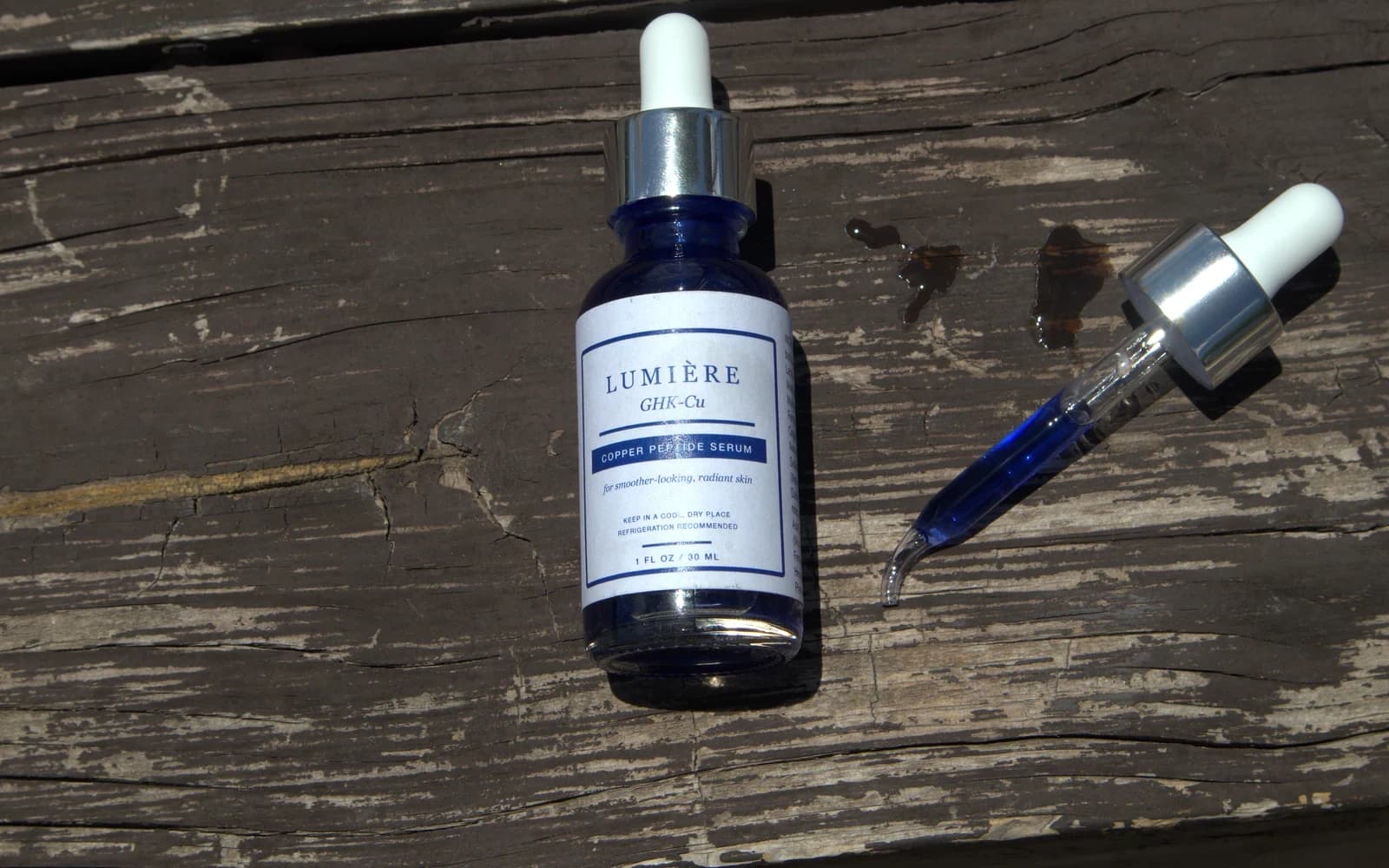
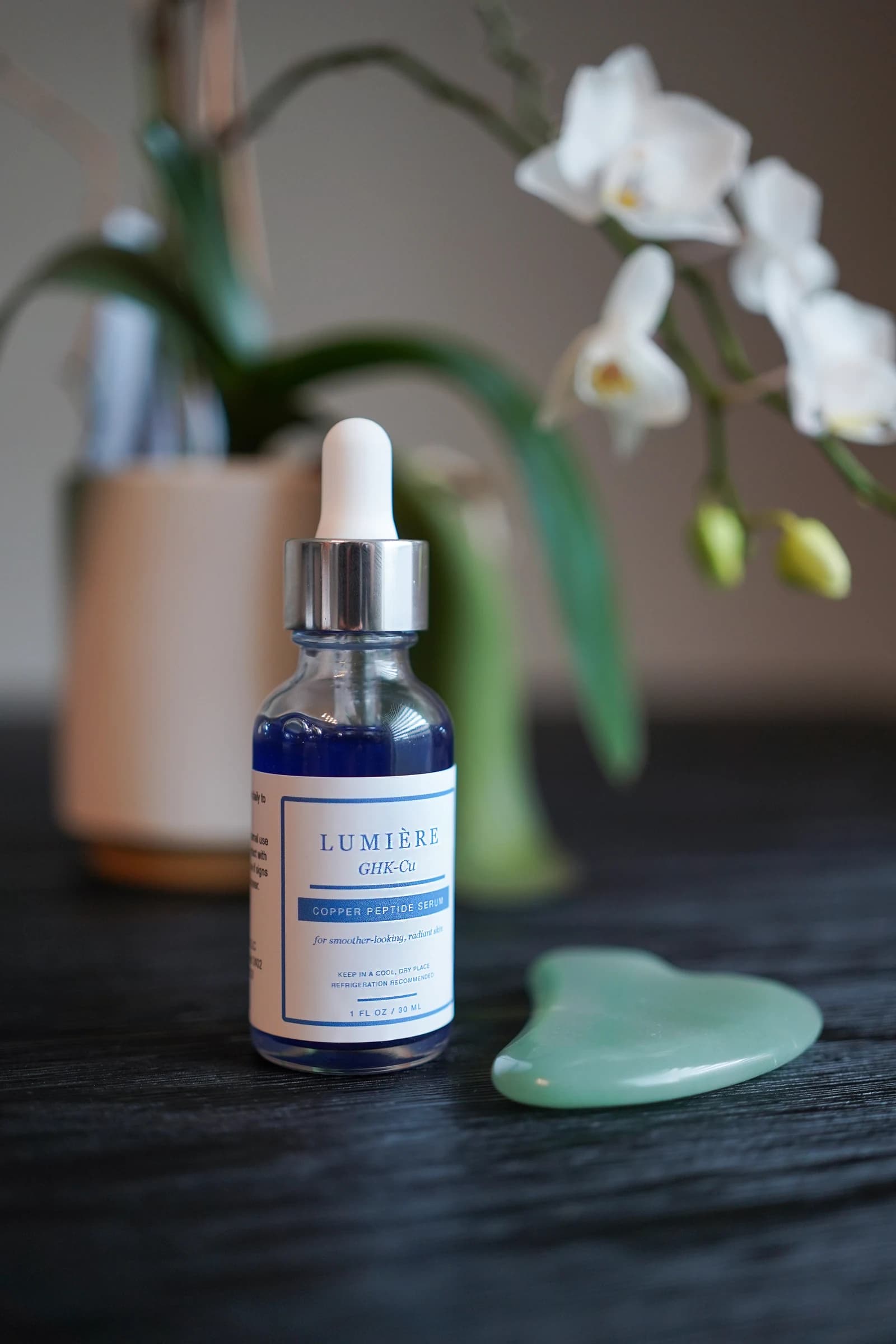
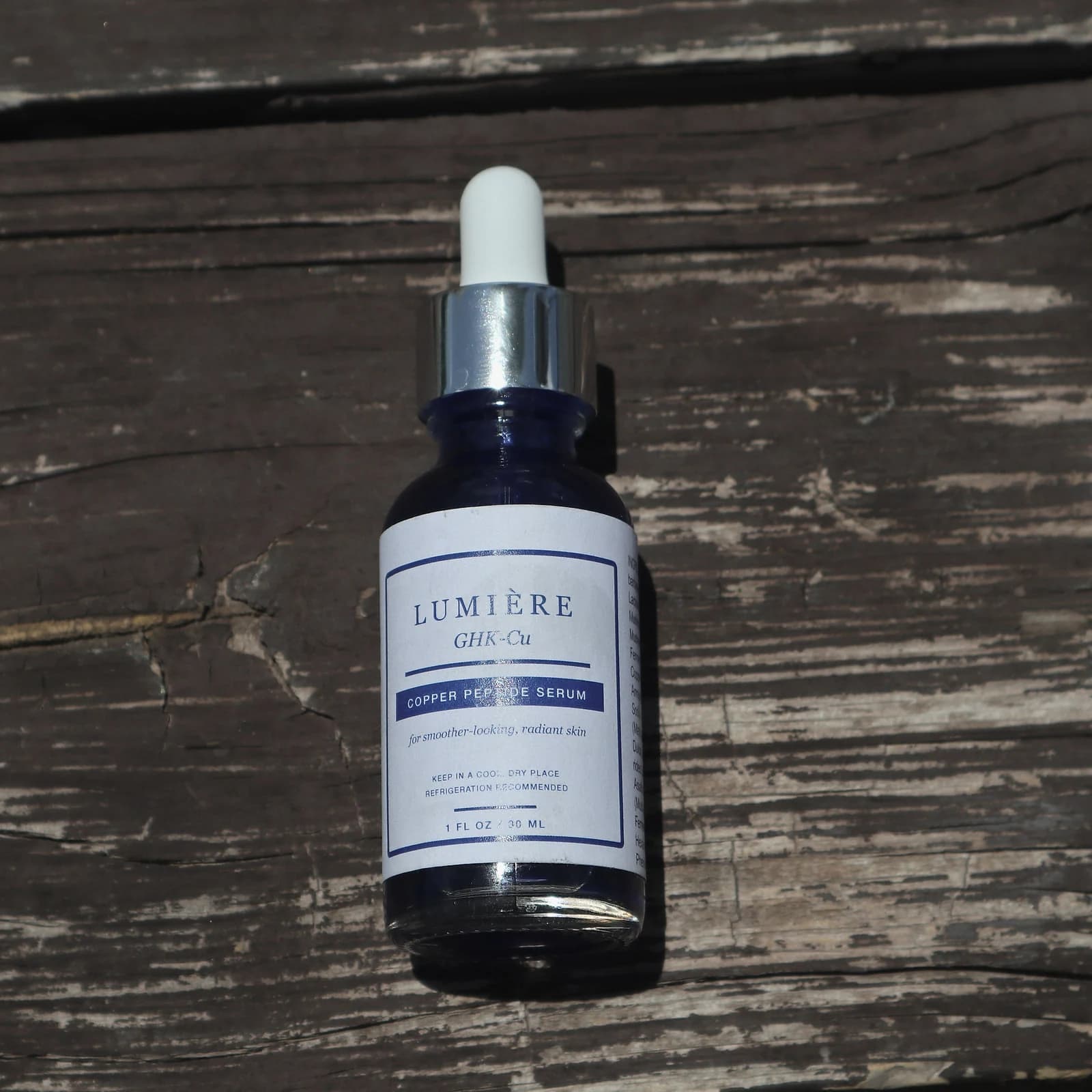
The studies discussed here investigate GHK-Cu or other specified experimental preparations. None tests Lumiere Routine’s finished serum. They explain scientific interest in the ingredient; they do not establish a performance claim for this product.
What cell studies have shown
Maquart and colleagues reported in 1988 that GHK-Cu increased collagen synthesis in cultured fibroblasts under their experimental conditions. That is a specific observation about cells exposed directly to an ingredient. It does not tell us how much of a topical serum reaches those cells through intact skin, or whether a consumer will see a change in texture. [1]
In 1992, Wegrowski, Maquart, and Borel examined substances called glycosaminoglycans in cultured human fibroblasts. These are components of the environment around cells. Their findings varied by the component measured and the concentration used; the experiment did not show an increase in hyaluronic-acid synthesis. This is a useful reminder that a biological response should be described precisely, rather than expanded into a claim that an ingredient improves everything. [2]
The skin surface changes the question
Applying a serum introduces a delivery question that a cell-culture experiment does not answer. In a 2010 laboratory study, Hostynek, Dreher, and Maibach measured copper after applying a copper-tripeptide preparation to separated layers of human skin. Copper was retained in and passed through tissue in that experimental setup. The measurements concerned copper, and the tissue was studied outside the body. [3]
Those details limit the conclusion. The experiment is not evidence that a retail serum delivers an intact copper–peptide complex to a particular target in a living person. Nor does it measure a cosmetic outcome. A finding about movement through a sample of skin should not be rewritten as a promise of visible improvement.
What a relevant human study would add
For a cosmetic claim, useful human evidence would identify the exact formula, who used it, how long they used it, what it was compared with, and how the outcome was measured. A controlled study can help separate an ingredient’s contribution from the effects of the base formula or changes unrelated to the product. Transparent reporting also includes adverse effects, withdrawals, and funding. These are core concerns of modern trial-reporting guidance. [4]
A photograph or an enthusiastic report from one person may be interesting, but neither answers all of those questions. Different lighting, additional products, and subjective expectations can complicate interpretation.
What this means for your skincare choice
The research supports continued investigation of GHK-Cu in skin-related biology. Moving from that statement to a numerical improvement, a treatment claim, or a promised timeline requires evidence closer to the product and the intended use.
For a skincare buyer, the next useful questions concern the complete formula, its directions, and evidence relevant to the promised benefit. A study can be worthwhile without settling all of those questions. Appreciating the research and recognizing its limits are compatible ways to approach an interesting ingredient.
Sources & further reading
- 1. [1] Maquart FX et al. Stimulation of collagen synthesis in fibroblast cultures by the tripeptide-copper complex glycyl-L-histidyl-L-lysine-Cu2+. FEBS Letters, 1988. ↗
- 2. [2] Wegrowski Y, Maquart FX, Borel JP. Stimulation of sulfated glycosaminoglycan synthesis by the tripeptide-copper complex glycyl-L-histidyl-L-lysine-Cu2+. Life Sciences, 1992. ↗
- 3. [3] Hostynek JJ, Dreher F, Maibach HI. Human skin retention and penetration of a copper tripeptide in vitro as function of skin layer towards anti-inflammatory therapy. Inflammation Research, 2010. ↗
- 4. [4] Hopewell S, Chan AW, Collins GS et al. CONSORT 2025 statement: updated guideline for reporting randomised trials. BMJ, 2025. ↗
Meet the serum.
Explore the GHK-Cu Copper Peptide Serum, with product details, care guidance and current availability.
Discover the serum ↗