Start with the name
GHK is a short peptide made from three amino acids: glycine, histidine, and lysine. A peptide is a chain of amino acids; three makes this one a tripeptide. Add copper in its copper(II) form, and the resulting complex is called GHK-Cu. The letters describe a particular molecule, rather than a general promise about what every copper-containing cosmetic can do. Research into its interaction with copper helps explain why the combination has attracted attention. [1, 2]
That distinction is useful when shopping. A product described simply as a peptide serum could contain quite different molecules. To understand the product, start with the actual ingredient declaration and its directions, rather than treating the word peptide as a complete description.
A story that began in the laboratory
In 1973, Loren Pickart and M. M. Thaler reported a tripeptide isolated from human serum in research involving liver-cell systems. This is an early landmark in the GHK story, not a study of a facial serum. A later paper, published by Pickart and colleagues in 1980, explored the peptide’s association with copper and proposed a role in cellular copper uptake. [1, 2]
Reading those papers in their original context matters. The discovery of biological activity gives researchers a question to investigate. It does not establish that a modern cosmetic delivers the same exposure, reaches the same cells, or produces a visible change on someone’s face.
What the copper relationship means
Copper does not simply sit beside the peptide as a separate decorative ingredient. It can coordinate with the peptide to form a complex. Lau and Sarkar studied this chemistry in 1981, examining copper–peptide interactions in solutions under specified conditions. Their work also illustrates why the surrounding chemical environment matters. [3]
For the consumer, the useful point is straightforward: the name of a promising ingredient tells only part of a formulation’s story. Its concentration, the ingredients around it, and the conditions in which it is stored are separate questions that require product information.
Why skin researchers became interested
Later research moved into questions relevant to connective tissue. In 1988, Maquart and colleagues reported increased collagen synthesis in cultured fibroblasts exposed to GHK-Cu. Fibroblasts are cells involved in producing connective-tissue components. This laboratory observation helps explain the ingredient’s place in skincare discussions, while remaining different from a demonstrated cosmetic benefit in people. [4]
From ingredient to finished serum
An ingredient experiment, a study of a particular formulation, and a test of a finished retail product answer different questions. Even when two products share GHK-Cu, evidence about one cannot automatically be assigned to the other. The formulation and the way it is used belong in the assessment.
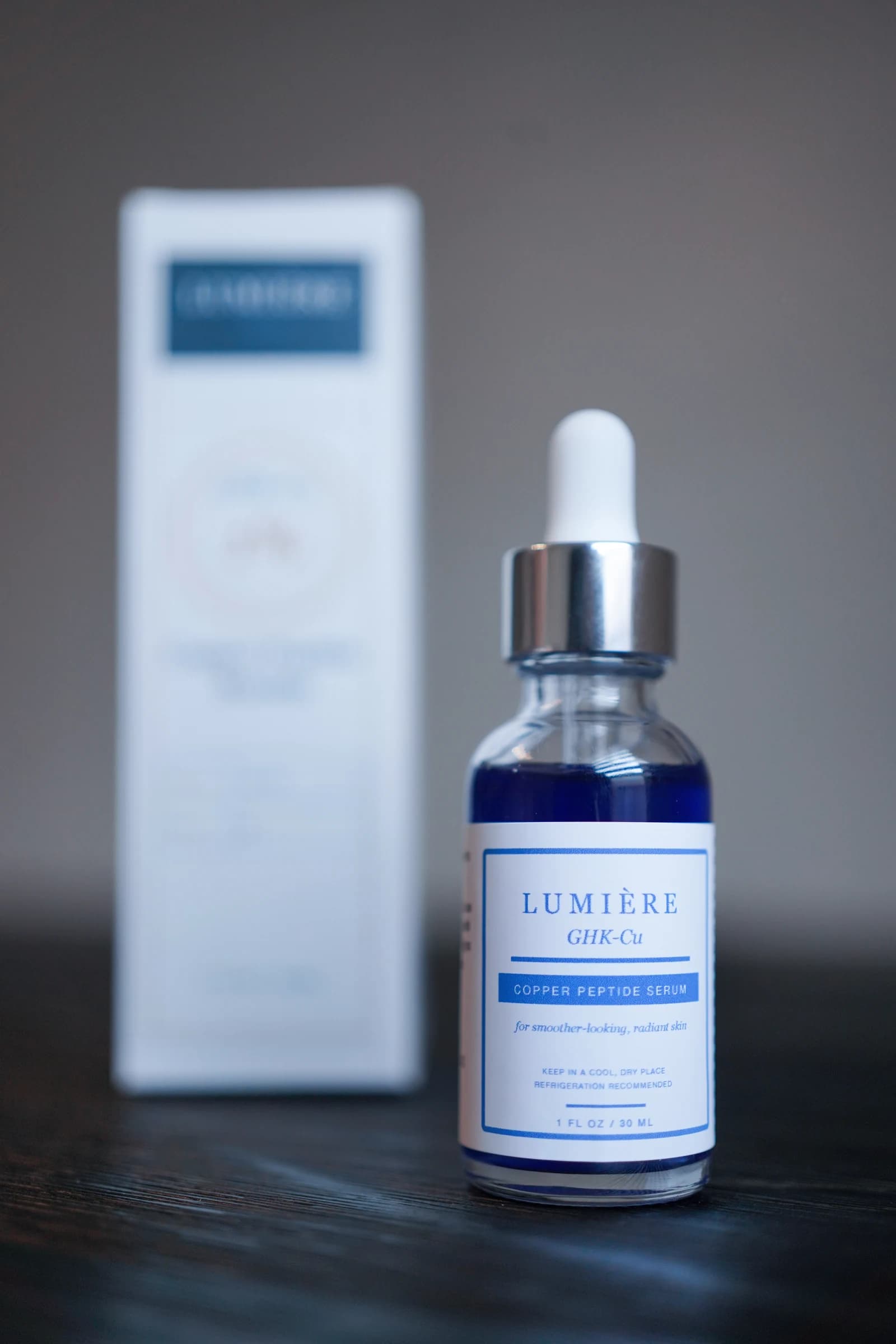
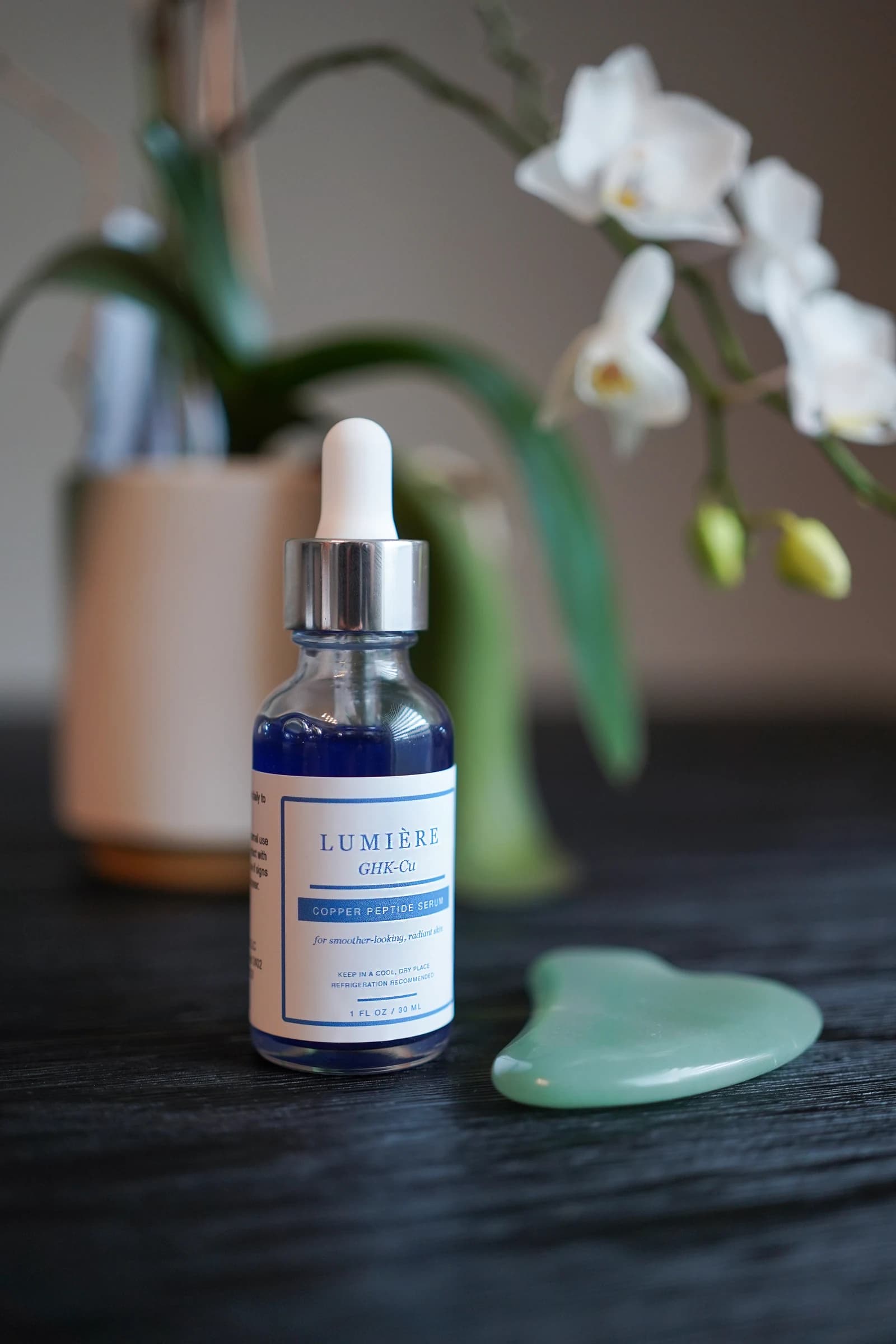
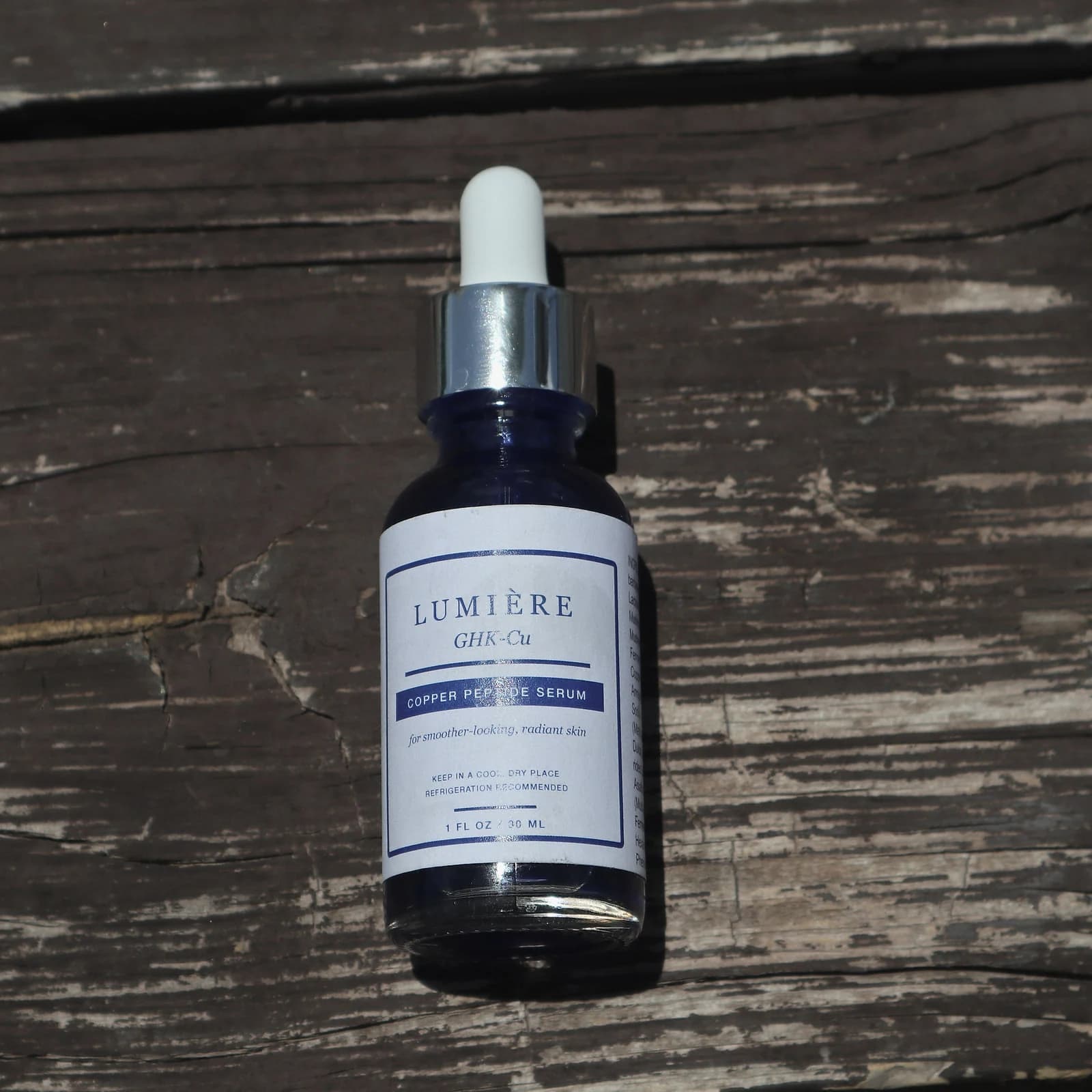
A bottle’s label can tell you what a product is called and how much it contains. A complete ingredient declaration and clear directions answer further questions about what you are buying. To judge a claim about visible results, look for a study of the relevant formula rather than assuming the ingredient’s history supplies that answer.
Keep curiosity specific
GHK-Cu is interesting because it has a traceable research history and a defined chemical identity. Useful questions follow from that history: what exactly was studied, under what conditions, and how closely does it resemble the product in your hand? Those questions make ingredient education more valuable than a list of impressive-sounding benefits.
Sources & further reading
- 1. [1] Pickart L, Thaler MM. Tripeptide in human serum which prolongs survival of normal liver cells and stimulates growth in neoplastic liver. Nature New Biology, 1973. ↗
- 2. [2] Pickart L et al. Growth-modulating plasma tripeptide may function by facilitating copper uptake into cells. Nature, 1980. ↗
- 3. [3] Lau SJ, Sarkar B. The interaction of copper(II) and glycyl-L-histidyl-L-lysine, a growth-modulating tripeptide from plasma. Biochemical Journal, 1981. ↗
- 4. [4] Maquart FX et al. Stimulation of collagen synthesis in fibroblast cultures by the tripeptide-copper complex glycyl-L-histidyl-L-lysine-Cu2+. FEBS Letters, 1988. ↗
Meet the serum.
Explore the GHK-Cu Copper Peptide Serum, with product details, care guidance and current availability.
Discover the serum ↗